
Protect & restore
Wildfire hardening for mountain homes
If you live up here in the trees, wildfire is part of the deal, and so is the worry that comes with it. The good news is that most of what protects a home is straightforward, and you can do it in a sensible order.
By Sam Breazile · Reviewed June 2026. Building codes and fire regulations change, so confirm the current rules for your property before you start.
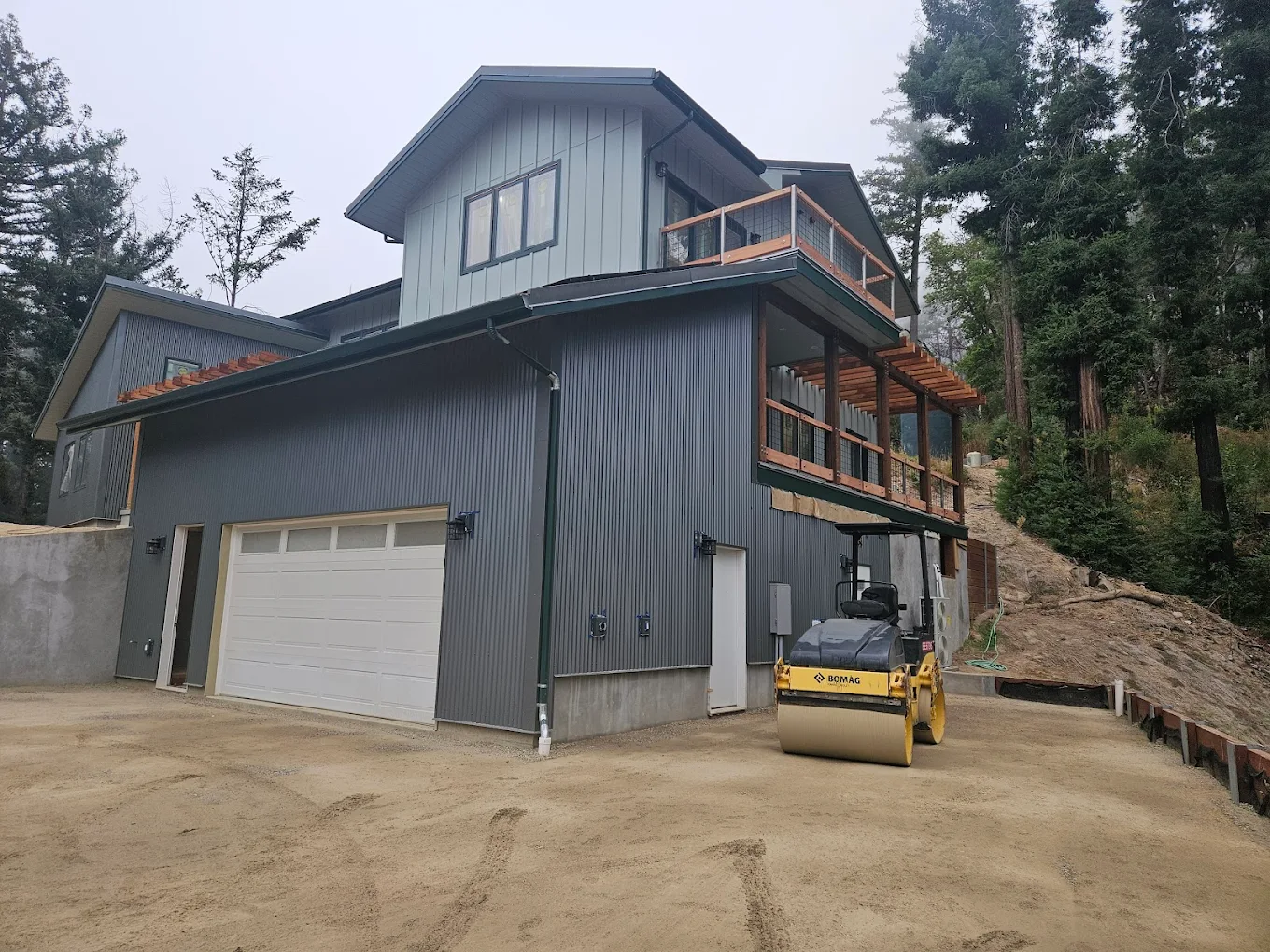
It usually starts with embers, not a wall of flame
When people picture a wildfire reaching a house, they picture a wall of fire rolling in. That happens, but it is not the most common way mountain homes are lost. More often it is embers: small burning pieces of wood and bark that the wind carries ahead of the fire, sometimes a mile or more. They land on roofs, pile up in gutters, slip through vents, and collect against the base of a wall or under a deck. One of them finds something dry and catches.
That is actually encouraging, because embers are something you can plan for. Hardening your home means closing off the easy paths an ember can take, and clearing away the dry fuel it needs to start a fire near the house. You do not have to do everything at once. You just have to start with the parts that matter most.
The roof and vents come first
If you only have the budget and the weekends for one project this year, make it the top of the house.
- Roof. California's wildland fire building rules call for a Class A roof, the most fire-resistant rating, on homes in fire-prone areas. Asphalt composition shingles, metal, clay, and concrete tile all commonly meet it. If your roof is aging, this is the upgrade with the biggest payoff.
- Vents. Attic and eave vents are open doors for embers. The code now calls for ember-resistant vents, either products tested and listed for wildfire exposure or, at a minimum, vents screened with fine metal mesh (roughly one-sixteenth to one-eighth inch). Plastic or wide-gap screens are not enough.
- Gutters. Keep them clear of needles and leaves, and consider metal gutter guards. A gutter full of dry duff is a perfect ember catcher right at the roof edge.
These rules used to live in something called Chapter 7A of the building code. As of January 1, 2026, the state moved them into a new, dedicated California Wildland-Urban Interface Code. The requirements are largely the same. The address just changed.
Walls, windows, and decks
Once the roof and vents are handled, work your way down the house.
- Siding and walls. The standard calls for exterior walls that are noncombustible (like stucco or fiber cement) or built to resist ignition. You do not always have to re-side a whole house. Paying attention to the bottom few feet of wall, where embers gather, goes a long way.
- Windows. Glass can break from the heat of a nearby fire, and once a window fails, embers and flame get inside. Dual-pane windows with at least one tempered pane hold up far better, and they are required for new and substantially altered homes in these zones.
- Decks and porches. A wood deck is essentially kindling attached to your house, and the space underneath collects leaves and embers. The code calls for ignition-resistant or noncombustible decking, and the simplest habit in the world helps too: keep the area under the deck clear and swept.
Defensible space: the first 100 feet
Hardening the structure is half the job. The other half is the land around it. California law requires 100 feet of defensible space around homes in high-risk areas, and that includes most of the Santa Cruz Mountains. It is split into two zones:
- Zone 1, the first 30 feet. Remove dead plants, grass, and weeds. Keep tree limbs trimmed up and away from the roof and chimney. Move firewood piles, and do not store anything flammable against the house.
- Zone 2, from 30 to 100 feet (or to your property line). Thin out brush and trees so fire cannot move easily across the ground or jump from treetop to treetop. Cut grass low and keep things spaced out.
Defensible space is not about scalping your lot. It is about breaking up the fuel so a fire slows down and firefighters have somewhere safe to stand. In Santa Cruz County, if you sell a home in one of these zones, you will typically need a defensible space inspection, so it is worth keeping up year to year rather than scrambling at the last minute.
Zone 0: the newest piece, still being finalized
There is one more zone you will hear about, and it is worth understanding because it is new and still in motion. Zone 0 is the ember-resistant zone: the first five feet right around the house. The idea is to make that band almost nothing-burns, no bark mulch, no shrubs against the siding, no wood fence attaching directly to the wall, nothing stored under the eaves.
The state called for these rules back in 2020, and the Board of Forestry and Fire Protection has been working through the details ever since. As of mid-2026 the regulations are still being finalized and are not yet in force. The current direction leans toward a phased, education-first approach over several years, applying to new construction first, with existing homes following later. Because the exact requirements and dates are still being settled, treat Zone 0 as where things are heading, not a fixed checklist yet.
You do not have to wait for the rule to act on the spirit of it. Clearing that first five feet of anything that easily catches is one of the cheapest, highest-value things you can do this weekend.
Helpful resources
Questions homeowners ask
Do I have to bring my whole house up to wildfire code right now?
No. The state's wildland-urban interface building standards generally apply to new construction, additions, and major exterior alterations, not to every existing home all at once. That said, the most protective upgrades, like a Class A roof, ember-resistant vents, and good defensible space, are worth doing on your own timeline regardless of whether a permit requires them.
Can hardening my home actually help with insurance?
It can. Under California's Safer from Wildfires framework, insurers that price for wildfire risk are required to account for mitigation work like ember-resistant vents, a fire-rated roof, and maintained defensible space. The California FAIR Plan also offers premium discounts for qualifying measures. Keep receipts and inspection records, because you will likely need to document the work.
What is the single most important thing to do first?
Start at the top of the house and the first few feet around it. A Class A roof, ember-resistant vents, clean gutters, and a clear five-foot band against the walls address the way most homes actually ignite, which is from embers rather than direct flame. From there, work outward into your defensible space.
Want to walk your own place and figure out where to start?
Sam will come out, look at your roof, your vents, and that first stretch of ground around the house, and talk through what makes sense for your home and your budget. No pressure, just a straight conversation. See how we work.