
New builds & ADUs
Building an ADU in the South Bay
Thinking about a backyard cottage for family, guests, or rental income? Here is how the rules actually work in 2026, in plain words, so you can decide if it is the right move for your lot.
By Sam Breazile · Reviewed June 2026. ADU rules change often and vary by city, so confirm the current rules for your address before you start.
What an ADU actually is
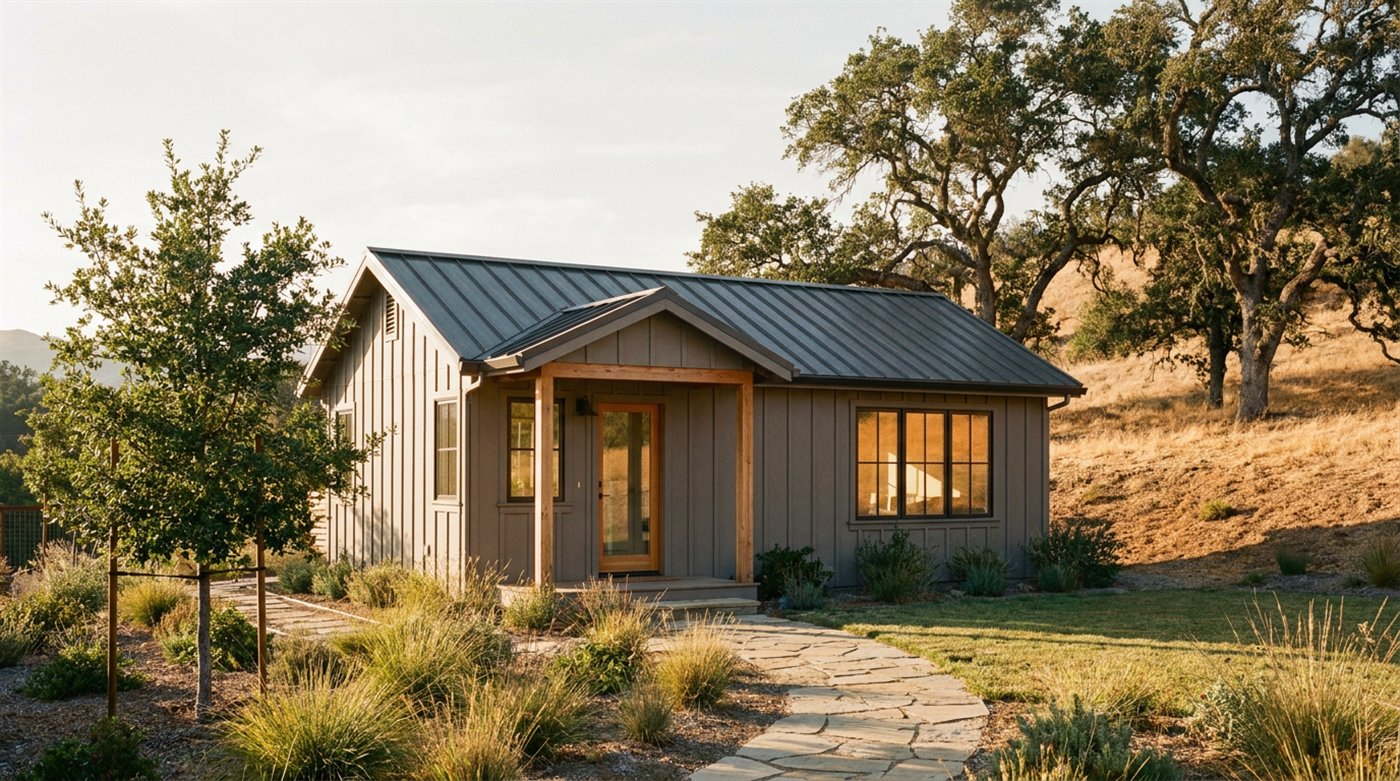
An ADU is an accessory dwelling unit. That is the official name for what most folks call a granny flat, an in-law unit, a backyard cottage, or a casita. It is a second, smaller home on the same lot as your main house. It has its own kitchen, its own bathroom, and its own way in and out. People live in it full time.
There is also a smaller cousin called a JADU, which stands for junior accessory dwelling unit. A JADU is carved out of the walls of your existing house, usually a converted bedroom or part of a garage. By state law it tops out at 500 square feet, and it can share a bathroom with the main house or have its own.
Most homeowners build an ADU for one of three reasons. They want a place for aging parents or grown kids. They want a guest space that earns its keep. Or they want steady rental income from the lot they already own. All three are good reasons, and California has spent the last several years making it easier to do any of them.
The rules are mostly set by the state now
Here is the part that surprises people. In California, the city or county does not get to make up its own answer on most of the big questions. The state sets the floor, and your local rules cannot drop below it. That is a good thing for you. A few things the state currently guarantees:
- Ministerial approval. Your application is reviewed against a checklist, not voted on by a board or put up for a public hearing where neighbors can object. If it meets the rules, it gets approved.
- A real clock. The agency has 15 business days to tell you whether your application is complete, then 60 days to approve or deny it once it is complete.
- Owner-occupancy is no longer required for a standard ADU. You can build an ADU as a rental and live elsewhere. JADUs are different. With a JADU you generally still have to live on the property, unless the JADU has its own separate bathroom and kitchen.
Size, setbacks, and the one rule every city must allow
Every jurisdiction in California, no exceptions, has to let you build at least one ADU up to 800 square feet, up to 16 feet tall, with side and rear setbacks of just 4 feet. A setback is simply how far the building has to sit from your property line. Think of that 800-square-foot, 4-foot-setback unit as your floor. No city can tell you no on that one if your lot qualifies.
You can often go bigger. The state says a city cannot cap an ADU below 850 square feet for a studio or one bedroom, or below 1,000 square feet for two or more bedrooms. Many detached units are allowed larger. The exact ceiling depends on your lot and your town, which is worth confirming for your specific address. A few other points worth knowing:
- If you convert something that already exists, like a garage, the old setback rules usually do not apply to the existing walls.
- Height limits often climb a little if you are near a major transit stop, and a bit more to match your main roofline.
- A detached ADU generally cannot sit in front of your main house.
Fees, and the number 750
Impact fees are charges a city collects to help pay for things like roads, parks, and sewer capacity that new housing draws on. They can add up. The good news is the state carved out a real break for smaller units. If your ADU is 750 square feet or less of interior living space, it is exempt from impact fees. If it is bigger than 750, the city can only charge those fees in proportion to the size of your main house, not as a flat hit. JADUs, because they are 500 square feet or less, are fully exempt from impact and school fees.
That 750 number is one of the biggest reasons a lot of folks land on a unit right around that size. You still pay for permits, plan check, and your utility hookups, but the impact fees are off the table.
Can you sell it separately?
This is a newer wrinkle and a common question. There is a state law that lets homeowners sell an ADU on its own, like a condo, separate from the main house. The catch is that it only works if your city has adopted its own ordinance to allow it. Some South Bay cities have, and many others have not yet. So if your plan is to build and then sell the ADU off as its own property, that is the first thing to check for your exact city or county, because the answer varies and the rules are still settling.
A quick word on the local picture. San Jose, Los Gatos, and unincorporated Santa Cruz County all follow the state floor, and each has its own ordinance with its own details on height, lot coverage, and parking. Some of those local pages have not caught up to the latest state changes, which means the state law often wins where they disagree. That is exactly the kind of thing worth sorting out before you fall in love with a specific design.
Helpful resources
Questions homeowners ask
Do I have to live on the property to build an ADU?
For a standard ADU, no. California removed the owner-occupancy requirement, so you can build one purely as a rental and live somewhere else. A junior ADU is different. With a JADU you generally do still need to live on the property, unless that junior unit has its own separate kitchen and bathroom rather than sharing with the main house.
How long does approval take?
The permit review itself is on a state-set clock. The agency has 15 business days to confirm your application is complete, then 60 days to approve or deny it. That covers the paperwork stage only. Designing the unit beforehand and building it afterward each take their own time on top of that.
How big can my ADU be?
Every California jurisdiction has to allow at least an 800-square-foot unit. Beyond that, a city cannot cap you below 850 square feet for a studio or one bedroom, or below 1,000 square feet for two or more bedrooms, and many detached units are allowed larger. The exact ceiling depends on your lot size and your town, so it is worth confirming for your specific address.
Want to talk it through?
Sam is happy to walk your backyard with you, look at what your lot can actually hold, and give you a straight read with no pressure either way. See what Sam builds.